
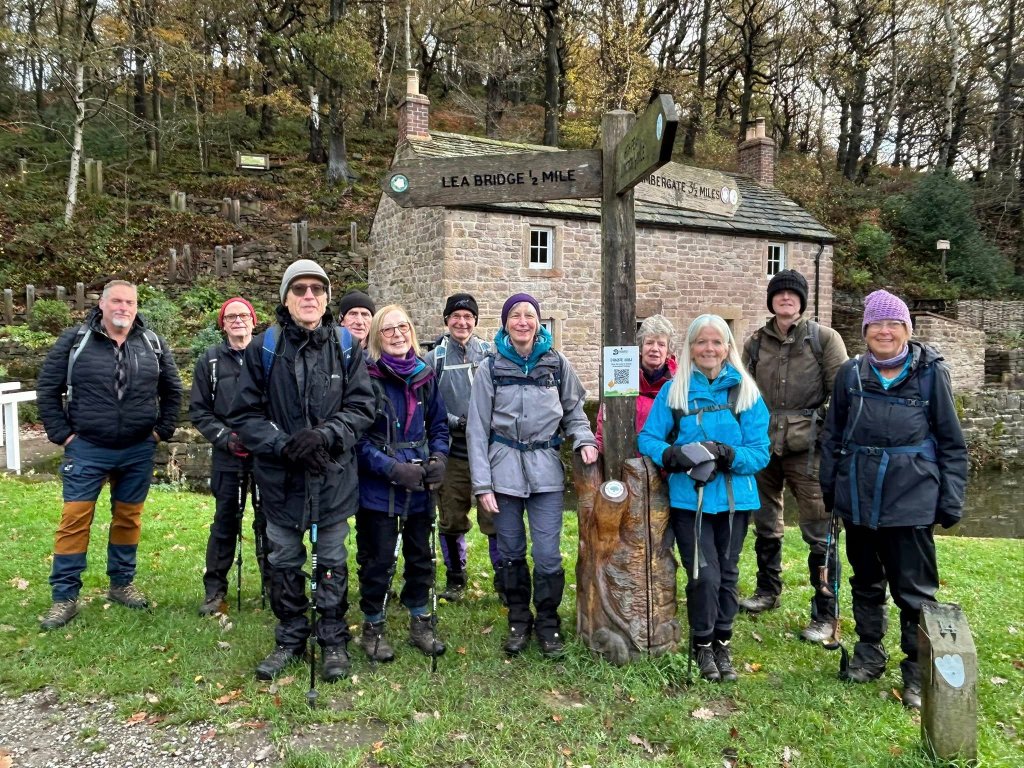
This 9.5 mile walk in the Matlock Bath area was not such a great challenge in terms of distance but it did provide some testing climbs for the 12 members who gathered in Lea Bridge. Everyone, however, passed the test with flying colours. The walk was an interesting mix of industrial and cultural heritage sites which provided some diversion and relief from the physical efforts.
Leaving Lea Bridge, the first reference to the industrial past was a disused branch of the Cromford canal known as the Nightingale Branch, named after Peter Nightingale, great uncle of the famous Florence. The canal was built to transport lead ore from the local mines. Soon after negotiating a non-existent marked path through the woods, we encountered the Cromford incline, a steep bank built to winch railway wagons on the Cromford & High Peak railway down to the valley. Stationary steam engines powered the incline with a gradient of 1 in 8.5, making it a marvel of Victorian engineering.
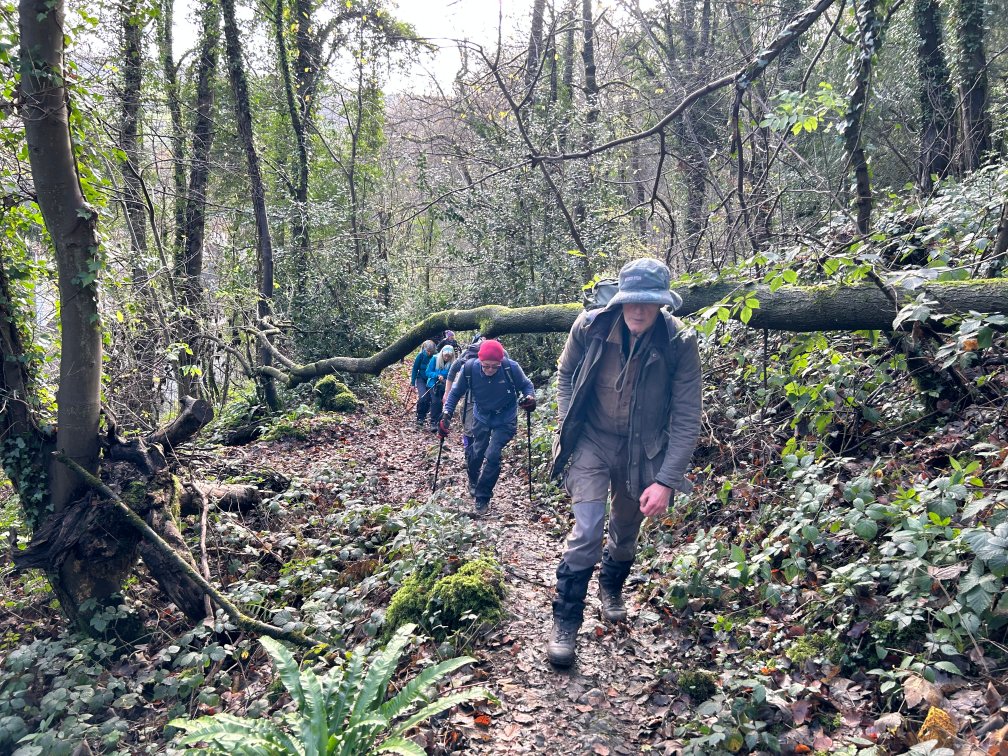
Walking on past Black Rocks and eventually through the woods above the Derwent valley, we dropped down a steep staircase into Matlock Bath. The town has its origins as a spa destination dating back to the 17th century thanks to natural thermal springs that were a favourite of the Romans. Over the centuries, it developed into a tourist hotspot with its amusement arcades, cable car and annual illuminations.
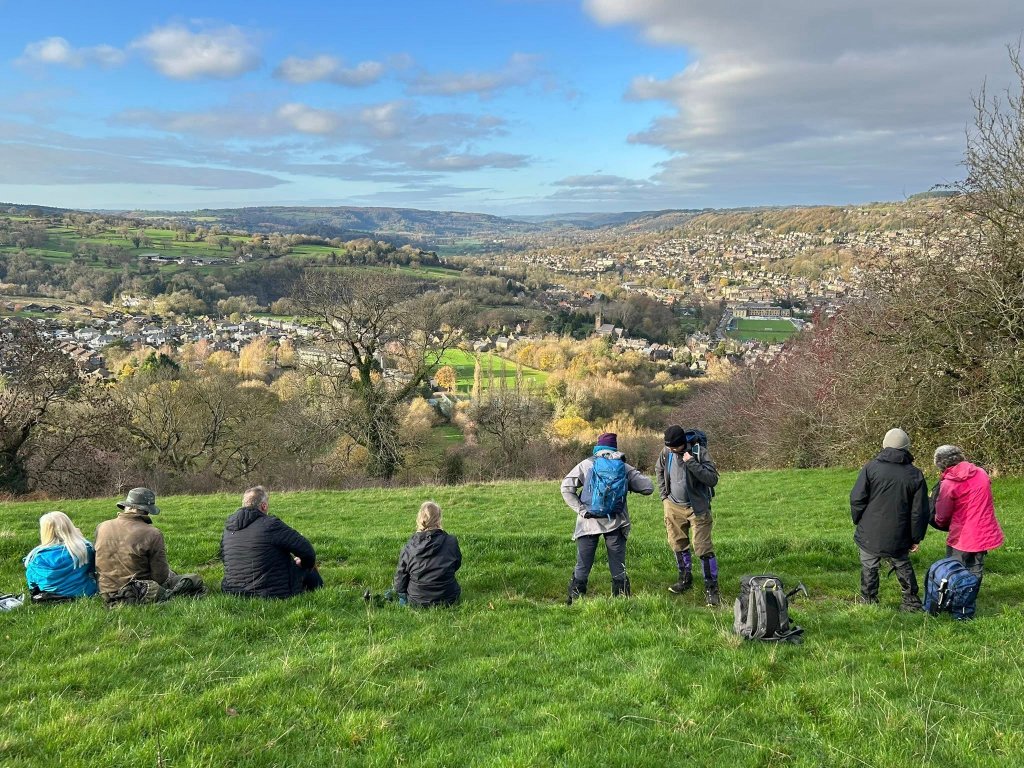
Leaving the town behind, we made the steep climb up to the hamlet of Riber, lunch being taken on the way at a scenic spot. Many people will have memories of Riber Castle when it was a wildlife park from the 1960s through to 2000 but it was originally built in a “folly” style as a residence for the local mill owner, John Smedley. Today it is being converted into apartments so its future is secured. The final part of our walk was through pleasant woodland bringing us back to our start point at Lea Bridge.